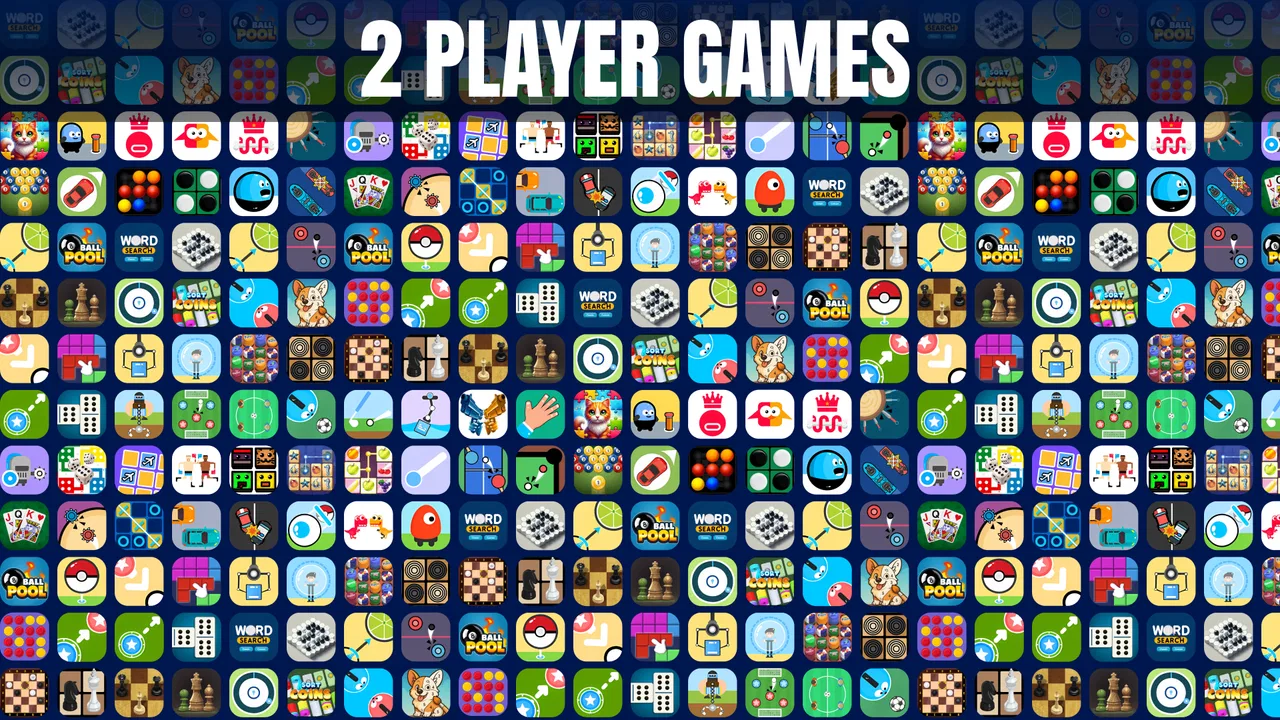
2 Player Games Offline - 1234
- 4.7
- Rating
- 10.00M
- Installs
- Free
- Price

 Analysis by App-foxy
I like board games most when they make conversation part of the experience, and 2 Player Games Offline - 1234 is built around that simple idea. It is a free board game collection from Fun Offline Games, designed for two people sharing one device rather than waiting for an online opponent. After spending time with it, I found its appeal less about building a long-term account and more about turning a short break, a family visit, or a quiet evening into a quick head-to-head session.
The collection includes boxing, fighting, chess, and snake-style games, so the mood can change quickly. One round may reward patience, while the next depends on fast reactions. That variety is useful, but it also creates the app’s main limitation: the experience is only as strong as the individual mini-game you choose. I would recommend it to people who want immediate local competition, not to players searching for a deep board-game platform with extensive progression.
How the first few sessions feel
The early goal is easy to understand: choose a game, hand the device to the other player when needed, and try to win. There is no complicated setup to learn before the first match. That makes the collection suitable for a sibling, partner, child, or friend who does not usually play mobile games. The Everyone age rating also fits that approachable design.
You May Also Like

 Blood Strike: 2.5 Anniversary
Blood Strike’s Loadouts Turn Every Drop Into a Tactical Gamble
A close look at Blood Strike’s custom loadouts: how fast access to signature weapons reshapes its battle royale rhythm, rewards preparation, and narrows the gap between fights.

 Pandora - Music & Podcasts
Pandora’s Music Is Easy to Start, but Harder to Recover
Pandora’s strength is its low-effort path from a seed to a station. Its weak spot is how much confidence it asks you to place in connection, setup, and quiet recovery.

 8 Ball Pool
 Is Built on Rivalries, Rematches, and Routine
A close look at the rivalries, rematches, shared routines, and unanswered safety questions that turn a quick pool match into a persistent mobile community.

 Samsung Music
’s Quiet Strength Is Playing What You Already Own
Its reach comes less from spectacle than from dependable access to a personal library. That simplicity is both the app’s strongest retention engine and its ceiling.

 AccuWeather: Weather Radar
AccuWeather Review: A Quick, Clear Forecast for Everyday Decisions
For everyday plans, the best forecast is the one you can understand quickly. AccuWeather makes rain timing, radar, and local conditions easy to act on, with a few trade-offs.

 Hill Climb Racing
Why Hill Climb Racing Still Turns Crashes Into One More Run
A tiny car, a bumpy hill and one more upgrade: Hill Climb Racing keeps resurfacing because its simple chaos makes every near-miss feel personal.
More From Our News Desk



In a realistic everyday situation, I can see this working well while waiting for food at a restaurant or during a journey when two people are sitting together without a reliable connection. Instead of opening a large online game and creating accounts, both players can start a local contest almost immediately. The shared-screen format also gives the result a more social feeling than playing against an anonymous opponent.
The opening matches are best treated as a way to discover which games suit both players. Chess gives the most familiar structure and leaves room for thoughtful decisions. Snake-style play is easier to understand at a glance and can create funny mistakes quickly. Boxing and fighting offer a more active change of pace. I would not assume that every option will appeal equally to the same pair; the collection works because it lets you move between different kinds of competition.
One useful habit is to agree on a small rotation before starting. For example, play one strategy-focused round, one reaction-based round, and then return to the favorite. This prevents the session from becoming repetitive and makes the result feel like a friendly mini-tournament. It also helps when one player is much stronger in a particular game, because changing formats gives the other person a better chance to compete.
Progress without a large campaign
The progress signals here are mostly personal rather than part of a visible adventure. You learn which mode fits your playing style, notice patterns in the other person’s decisions, and improve through repeated matches. Chess can reward planning, while the more action-oriented choices test timing and attention. That kind of progress is modest, but it is honest: the main improvement comes from the players, not from collecting elaborate rewards.
This matters because many mobile games use unlocks, missions, and upgrade systems to create a reason to return. This collection is more immediate. If you are expecting a campaign map, a character-building system, or a long list of achievements, you may find the experience light. On the other hand, people who dislike grinding can appreciate that the basic appeal is available from the beginning.
I found the strongest long-term use case is not playing alone repeatedly, but developing a small rivalry with someone nearby. A rematch feels meaningful when both players remember the previous mistake or adapt to a familiar tactic. The app becomes a convenient container for that rivalry rather than a substitute for it. That is an important distinction when comparing it with online board-game services, where matchmaking and rankings often provide the motivation.
For parents, the lack of a complicated progression loop can be an advantage. A child can focus on taking turns and understanding the rules instead of chasing virtual items. Adults may also prefer a short session that ends naturally. The trade-off is that there may be less to hold attention when no second player is available.
Challenge and the difficulty curve
The difficulty curve depends heavily on the chosen game and the people sharing the device. Chess can become demanding as soon as one player knows basic tactics. A simple-looking action game can also expose a large skill gap if one person reacts faster or has played similar games before. Because the competition is local, the opponent’s ability often shapes the challenge more than any built-in progression.
That makes the collection flexible for mixed groups, but it can also make balance uneven. If an experienced player dominates every round, the newer player may stop enjoying the session. I would solve that by switching games, giving the less experienced person time to learn controls, or using a best-of-three format instead of playing endlessly until one person is frustrated. The app is at its best when both players treat the match as a shared activity rather than a serious test.
Chess is the clearest choice when you want a slower and more deliberate contest. It gives each move weight and can fill more time without needing rapid input. Snake is better when you want a compact challenge that is easy to explain. Boxing and fighting are useful when the group wants energy and quick reactions. This division is more practical than choosing randomly: pick the mode according to the players’ mood and experience.
There is also a subtle pacing advantage in having different formats together. A long-thinking game can be followed by something immediate, which keeps a session from feeling stuck in one rhythm. However, variety does not automatically equal depth. Players who want refined rules, advanced strategy, or a carefully balanced competitive ladder will probably find a dedicated chess app or a specialized fighting game more satisfying.
My advice is to judge the collection after trying it with the person you actually plan to play with. A game that feels basic against one opponent may become surprisingly entertaining against someone who takes risks or makes unexpected choices. Conversely, a mode that looks exciting in the description may lose its appeal if the controls do not suit your group. The social context is central to the experience.
What keeps people returning
The main retention pressure is the possibility of a rematch, not a heavy reward structure. A close result naturally creates the question of who would win next time. That is a healthy reason to return because it comes from the players’ interaction. It also means the app may lose its pull once the same two people have exhausted their favorite formats or no longer feel competitive.
There is a useful difference between this and a typical online alternative. Online games can provide opponents whenever you are alone, while this collection is strongest when another person is physically beside you. Online services may also offer rankings and persistent records that make every match part of a larger journey. Here, the reward is immediate entertainment and the memory of the match itself.
The offline focus is especially valuable in places where connectivity is inconvenient. It makes the app practical for travel, waiting rooms, or casual family use. Still, offline play does not remove every possible friction. You need two people willing to share one screen, and the device must be comfortable for both players to see and reach. On a small phone, that can matter more than the game selection.
The free entry point makes experimentation easy, while in-app purchases range from $0.99 to $4.99 per item. I would approach those purchases carefully and decide whether the available collection already gives enough variety for your group. For a casual user, paying is not automatically necessary to understand the app’s value. The sensible test is whether you are returning often enough to justify spending, rather than buying simply because a session feels short.
Another practical point is session length. This is a good choice when you want several brief contests instead of one large commitment. It fits naturally into spare moments and can be put down without losing the whole evening. If you prefer a game that develops over weeks through a campaign or a competitive ranking, a dedicated alternative will offer a stronger sense of persistence.
Who should choose it, and who should skip it
I would suggest 2 Player Games Offline - 1234 to families, couples, roommates, and friends who often sit together and want quick local games. It is also a sensible option for someone looking for a free starting point before buying a larger party-game collection. The combination of chess, snake, boxing, and fighting gives a group enough contrast to discover a shared favorite.
I would be more cautious if you mainly play by yourself. The title’s central idea is two-person local play, so it does not replace a strong single-player puzzle game, an online matchmaking service, or a full chess trainer. It is also not the best match for players who measure value through detailed statistics, ranked competition, or a substantial unlock path.
Compared with a physical board-game box, the app is faster to start and easier to carry, but it cannot provide the tactile feeling of cards, pieces, or a real board. Compared with a collection of separate mobile games, it is more convenient because several formats sit together, though a specialist app may offer deeper rules and more polished long-term systems in its particular genre.
Fun Offline Games has kept the concept broad and accessible rather than turning it into a demanding competitive platform. That choice explains both its strength and its ceiling. New players can join without much preparation, but experienced players may soon want more depth in whichever mode they enjoy most.
Practical details before installing
The game is free to download and currently sits at version 1.12, with Android support starting at version 7.0. It has passed the five-million-install mark and holds a 4.6 average from roughly twenty-six thousand ratings, which suggests that the local two-player idea has reached a substantial audience. Those figures are useful context, but they do not guarantee that every mini-game will suit your particular device or playing style.
The store page identifies it as a board game, although the contents move beyond traditional board play through action-focused options. That broad classification makes sense for the collection as a whole, but I would think of it primarily as a local mini-game bundle. The developer is Fun Offline Games, and the Everyone rating makes it easier to consider for mixed-age groups.
Before a shared session, I recommend choosing a comfortable surface, keeping the screen clean, and deciding whether you want quick rounds or a small tournament. Those details sound minor, but they make a difference when two people are passing or sharing one phone. If one player has never used the controls, begin with the most immediately readable option instead of starting with chess and assuming both people want a slow match.
My progression verdict
2 Player Games Offline - 1234 succeeds when its goal is clear: give two people a quick collection of local contests with no need to build a complicated routine around them. Its early goals are accessible, its progress comes through learning and rivalry, and its pacing benefits from moving between thoughtful and fast games. The absence of a deep unlock system is not a flaw for casual players, but it limits the reason to keep playing alone.
I would install it for travel, family gatherings, or regular face-to-face rematches. I would skip it if my priority were a serious online ladder, a rich single-player campaign, or one highly developed game rather than a varied bundle. Its best feature is the immediate human competition beside you, not a long progression track.
Overall, I see it as a useful free addition for anyone who wants low-pressure two-player entertainment on one device. It does not try to replace dedicated chess software, online board-game platforms, or full party-game collections. Instead, it fills a narrower space well: short offline matches that are easy to start, easy to explain, and enjoyable when both players are willing to laugh at mistakes and play one more round.
FAQs for 2 Player Games Offline - 1234
01What is 2 Player Games Offline - 1234?
2 Player Games Offline - 1234 is a mobile app designed to offer a variety of multiplayer games that can be played without an internet connection. The app features a range of games suitable for two players, making it perfect for friends or family who want to enjoy gaming together on a single device.
02How many games are available in the app?
The app features a diverse collection of over 20 different games. These range from classic board games to quick reflex challenges, ensuring there's something for everyone. Each game is designed to be easy to learn, allowing players to jump right in and start having fun without a steep learning curve.
03Is the app suitable for all ages?
Yes, 2 Player Games Offline - 1234 is designed to be family-friendly, offering games that are suitable for all age groups. The app includes games with simple rules and controls, making it accessible for younger players, while still providing enough challenge to keep older players engaged.
04Does the app require an internet connection to play?
No, one of the main features of 2 Player Games Offline - 1234 is its offline functionality. Once downloaded, all games can be played without needing an internet connection. This makes it ideal for use in areas with limited connectivity, such as during travel or in remote locations.
05Are there any in-app purchases or ads?
The app offers a free version supported by ads, which may appear between games. There is also an option to purchase an ad-free version for a one-time fee, allowing for uninterrupted gameplay. Any in-app purchases are optional and are designed to enhance the user experience.
Pros
- Simple and intuitive user interface.
- Variety of games to choose from.
- No internet connection required.
- Suitable for all age groups.
- Quick installation and setup.
Cons
- Limited game customization options.
- Ads can be intrusive at times.
- Graphics are basic and simplistic.
- Some games lack depth and complexity.
- No online multiplayer feature.

2 Player Games Offline - 1234
Gallery